Call it whatever you want. Tomorrow, people vote on it.
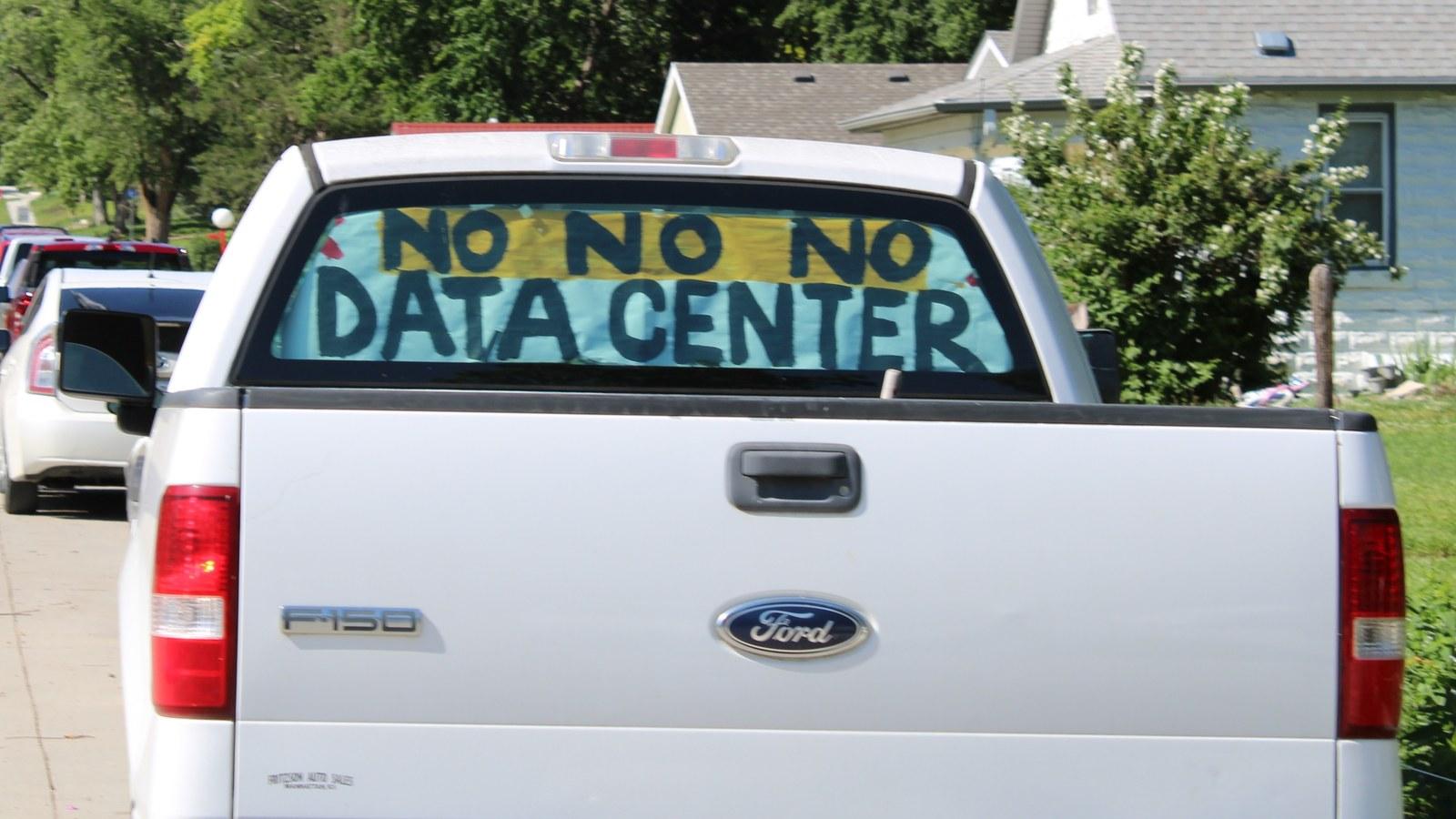
I read this one on my phone this morning, before work, and I laughed. Not because it was funny. Because it was so familiar.
OpenAI reportedly wants to stop calling its data centers data centers. The new name, according to Axios reporting picked up by TechCrunch on November 1, would be "AI compute campuses." The rebrand is part of a policy and PR push planned for right after Tuesday's midterm elections.
I work in IT support. I write code at night while I'm studying software engineering at WGU. I have never negotiated a power contract or run a data center. But I do know what a rename looks like when a product is in trouble with its users. You change the label on the box and hope nobody opens it.
That is not quite fair here, and I want to be honest about that too. The reported plan is not only a name. OpenAI's chief global affairs officer, Chris Lehane, told Axios the company plans to offer community compacts and propose state legislation giving residents a meaningful say in how projects are built and what benefits they receive. TechCrunch also notes that Amazon and Microsoft have said they will no longer use NDAs in negotiations with local governments.
That part matters. A compact is a promise you can check. A name is not.
The timing tells you why this is happening now. Tomorrow, November 3, voters in 10 states will decide 41 local ballot measures related to data centers, according to Ballotpedia figures reported by Smart Cities Dive. Seventeen would prohibit development. Eight would empower local governments to permit it. Across all of 2026, Ballotpedia counts at least 49 such measures in 13 states, and all six already decided favored greater limits.
Ohio alone accounts for 21 of Tuesday's measures. Smart Cities Dive reports Ohio already has 257 data centers, at least 138 municipalities and townships with moratoriums, and 23 communities that have effectively banned them, citing the Ohio Capital Journal. That is a whole state learning how to say no, town by town.
The polling explains the panic. Pew Research Center surveyed 10,548 U.S. adults from July 20 to August 9, and found 54% now say data centers are mostly bad for the environment, up from 39% in January. Half say they are mostly bad for home energy costs, up from 38%. And 49% say they are mostly bad for quality of life nearby, up from 30%. Only 4% see a mostly good impact in each area.
Read that last number again. Four percent.
So I get the instinct to rename the thing. "Data center" now sounds like a bill going up and a building going up next door, with no say in either. "AI compute campus" sounds like a place with jobs and a future. Lehane told Axios the midterms will be "a bit of a movie trailer for what you're going to see in 2028," when he expects AI to be the issue in the presidential election.
I am less interested in the name than in the one concrete behavior attached to this week. Reports today say OpenAI plans a Grid Protectors program that would extend a flexibility deal it already has in Georgia to campuses it develops directly. The Georgia deal is on the record: the state Public Service Commission approved a Georgia Power contract for a planned OpenAI campus in Effingham County, with 3.2 gigawatts of power, OpenAI paying the full infrastructure cost, and up to 1 gigawatt of flexible demand response. Power delivery is phased from 2028 to 2032, and the campus is expected to cost more than $30 billion.
That is a behavior, not a label. If a campus can actually turn down when the grid is stressed, that is worth something to the neighbors. But notice the dates. The Georgia campus is not running yet. The test of that promise is years away, and reports flag that the new pledge would cover campuses OpenAI develops directly, not necessarily capacity it rents from partners. So I am filing this under promising, unproven. I have seen enough vendor promises in IT support to know the difference between a contract clause and a result.
I have spent the last month writing about power as the real bottleneck for AI: the grid saying no, towns routing around a no, companies bringing their own power. Now the bottleneck has a ballot attached to it. You can rename a building, you can write a compact, you can promise to flex a gigawatt in 2030. Tomorrow, in 41 places, voters get to answer a simpler question: do we want this here, on these terms, or not at all?
If you are a student or a job seeker like me, that is the skill hiding inside this story. It is not prompting. It is not picking the winning chip. It is the boring, durable work of making a big project legible to the people who live next to it: real costs, real power numbers, real say, in writing, before the concrete pours. The companies that learn that will keep building. The ones that only learn new names for old buildings will keep losing votes.
I will be watching Tuesday's results. Not because a ballot measure will settle AI. It won't. But a name change tells you what a company wishes people thought, and a vote tells you what they actually think.
Sources: TechCrunch, November 1, 2026, Smart Cities Dive, October 29, 2026, Ballotpedia, data center-related ballot measures, 2026, Pew Research Center, September 22, 2026, Data Center Dynamics on the Georgia Power deal.
Cover photo: "Anti-data-center sentiment in rural Kansas neighborhood" (May 24, 2026), by Kansas / @kc_talkradio, via Wikimedia Commons, CC BY 4.0, cropped to 16:9.