Google just bought 3.6 gigawatts
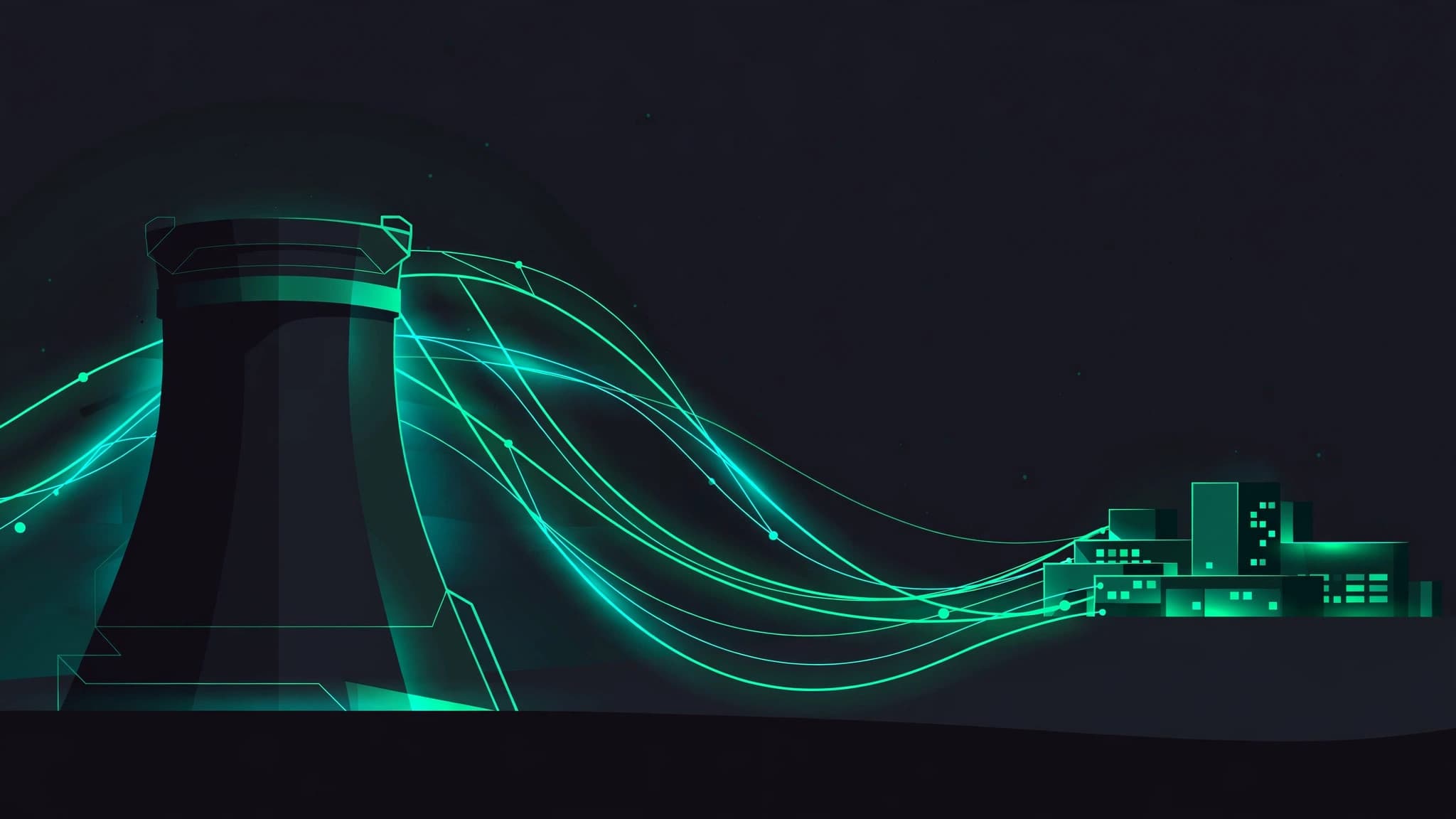
Last night I pushed my commits like I always do, and I spent a few minutes scrolling through the week's news. That's the routine. Code, commit, news, sleep.
The biggest story in my field this week isn't about a model. It's not a framework. It's a power contract.
On Tuesday, Google signed a deal with Constellation Energy for 3,590 megawatts of electricity. Let me say that again in plain English: a search engine company bought 3.6 gigawatts of power in one deal. It's the largest AI energy contract ever signed, according to the coverage, and it lives on the PJM grid, the biggest power grid in the country.
The structure of the deal is what got me. It's two parts. First, 890 megawatts of brand-new nuclear capacity, squeezed out of 11 existing reactors across Illinois, Pennsylvania, and New Jersey by upgrading them. Constellation is putting more than $4.3 billion into those upgrades, and the first extra power arrives in 2028. That's a 20-year deal. Second, 2,700 megawatts from Constellation's existing plants under a separate 15-year agreement. Roughly three-quarters of the power is just today's fleet, bought in bulk for the next decade and a half. (Reuters, TheStreet)
And Google isn't even the only customer this month. About a week earlier, Constellation signed a 20-year deal with Amazon for 690 megawatts from its Calvert Cliffs plant in Maryland. Two hyperscaler uprate deals in a single week. TheStreet pointed out the obvious: reactor upgrades have become a product Constellation can now sell on repeat.
Then on Friday, another one: Big Watt Digital and PowerHouse Data Centers got planning approval for the Taylor Technology Campus in Texas. Up to one gigawatt of hyperscale data center capacity on a 664-acre site, designed around dedicated behind-the-meter power generation, meaning it makes its own electricity on site instead of waiting for the grid. The two companies say they have 12 gigawatts of capacity in active development and a pipeline over 24 gigawatts. (Business Wire, Motley Fool)
So in one week: the biggest power deal in AI history, the second hyperscaler signing the same vendor, and a 1-gigawatt campus in Texas that doesn't even want the grid.
Nobody finds this strange anymore
That's the part I keep coming back to. Not the size of the numbers. The size is the point, and everybody gets it now. What's strange is how ordinary this all feels. A tech company buying 20 years of electricity like it's a cloud subscription. A power company selling "reactor uprates" like a product line. A data center campus that ships with its own gas-powered power plant, as if that's just how buildings work now.
I'm a WGU software engineering student. I write code. My code weighs nothing. Last night's commits were probably a few hundred lines, and they cost me nothing to push. But here's the honest math I've been sitting with: my few hundred lines of code only do anything because somewhere, someone is upgrading eleven nuclear reactors so the data centers don't blink.
I don't know the first thing about power engineering. I couldn't tell you what an uprate involves beyond swapping in newer equipment. But I think that's exactly why this story matters for people like me. The industry I want to work in is now, in a very literal sense, an energy industry that happens to run software. Microsoft is restarting Three Mile Island. Google is funding 11 reactor upgrades. Amazon has a 20-year deal on a nuclear plant in Maryland. These aren't side projects. They're the main project.
What I'm actually taking from this
Two things. First, the bottleneck keeps moving down the stack. It was chips. Then it was memory. Then it was the grid. Now it's the reactors themselves, and the industry isn't waiting. It's buying the problem and engineering around it. That's a pattern worth watching, because wherever the bottleneck sits, that's where the work is.
Second, and this one is personal: I spend my nights trying to get better at building software, and the software industry spends its days trying to get better at buying electricity. There is no contradiction there. But it does mean the "tech job" I'm applying to one day might sit a lot closer to a power plant than to a code editor. I'd rather know that now.
The news scroll ends here for tonight. Commits are pushed. The reactors are humming. Back at it tomorrow.