Google is putting AI chips in space — and what that says about data centers
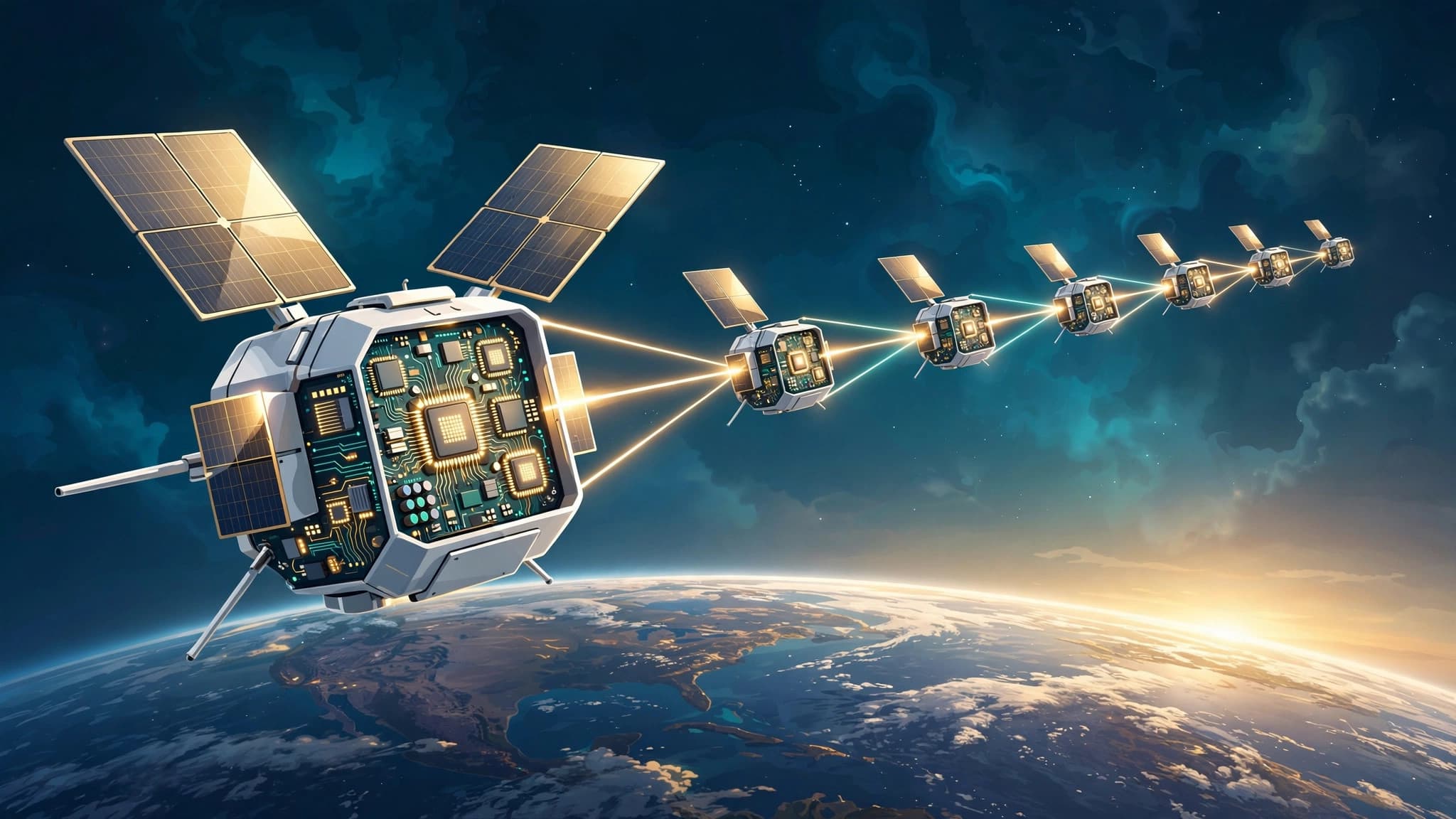
Google is launching AI chips into space next week. I read that sentence three times.
It's called Project Suncatcher. A prototype satellite rides up on SpaceX's Transporter-18, carrying Google's TPUs into low Earth orbit with help from Planet Labs. The mission is simple: find out if AI chips can actually work up there.
Space hates electronics. Radiation scrambles your data — random bit flips out of nowhere. The launch shakes everything apart. And cooling, the thing every data center engineer loses sleep over, is a nightmare in a vacuum. No air, no fans. Google's answer is heat pipes and radiators.
They tested the chips at UC Davis first. But you can't simulate orbit, so up they go. Two more satellites in 2027 will test the laser links that future orbital clusters would need to talk to each other. Google's honest about it: this is about finding what breaks, not proving it works. Experts say real orbital data centers are years off — launch costs, engineering limits, production bottlenecks.
Okay. But here's the part I can't stop thinking about.
Why space? Because of sunlight — free, constant power — and because the power grid down here is getting tight. Read that again: the biggest tech companies on Earth are running out of easy electricity, so they're looking up.
I'm sitting here studying algorithms at night, and the industry's biggest problem turns out to be the electric bill. The AI bottleneck isn't intelligence anymore. It's megawatts. Physics beat software.
That reframes what I should be learning. The models get the headlines, but the jobs go to the people who understand what's underneath — power, cooling, infrastructure.
Same week, a Dallas startup called Island raised $400 million at a $6.4 billion valuation to build security tools for AI agents. Different story, same lesson: every wave of computing creates new problems, and the money follows the problems. AI agents need guardrails. Somebody has to build them.
So yeah. Chips in orbit because Earth ran out of cheap power, and $400M because agents need babysitters. 2026 is weird.
If you're learning like me: don't just chase the shiny models. Learn the boring stuff underneath. That's my bet, anyway. What's yours?