Microsoft offered 60,000 people the door. The data center folks weren't invited.
I read this one this morning before work started, and I just sat there with the number for a minute. Sixty thousand. That's not a layoff round. That's a city.
Microsoft offered voluntary buyouts to around 60,000 employees on Monday, according to Bloomberg's reporting, picked up by Engadget. That's about 27 percent of a workforce of roughly 223,000 people. The offer is open to employees at vice president level and below, on participating teams in the United States, Canada, the United Kingdom, and India.
I want to be clear about one thing first, because the headline number is doing a lot of work on its own. Eligible is not the same as leaving. This is voluntary. Nobody knows how many people will actually take it. The last time Microsoft did something like this, earlier this year, only a bit more than 30 percent of the eligible group signed up, Engadget notes. Sixty thousand people got the letter. That doesn't mean sixty thousand desks empty out.
But the list is what got me. Not who got the offer. Who didn't.
The teams covered include Windows, Xbox, Copilot, hardware, human resources, and finance, according to ad-hoc-news. Carved out entirely: cloud and AI data centers, sales, marketing, IT security, quantum computing, and the commercial business. Microsoft declined to comment on those internal boundaries, that same report says.
Read that list again. The Copilot team is eligible. The people who keep the buildings running are not.
The part that stuck with me
I spend my days on IT tickets. I know what unglamorous work looks like, and I know what happens when it doesn't get done. Nothing dramatic. Things just stop. A switch goes down, a room gets hot, somebody can't log in, and suddenly a whole team is standing around waiting on one person who knows where the cable goes.
Microsoft's memo, from Chief People Officer Amy Coleman, frames the offer gently. "This offer gives eligible employees who may be considering a future outside the company a new choice to make that transition now with support," she wrote, according to the Daily Caller. The reported terms are 60 days of base salary plus one week's pay for every six months of service, with senior roles doubled up to a 39-week cap, and granted stock options kept intact, per ad-hoc-news. Applications close in early December, with December 31 set as the departure date.
That's a real offer, and for some people it will be the right one. I'm not going to pretend I know what I'd do with it. I'm a WGU software engineering student who works IT support while studying. I've never been on the receiving end of a letter like that from a company this size, and I don't want to cosplay as someone who has.
What I do know is the context around it, because I've been writing about it all month. In July, Microsoft said capital spending for the September quarter would top $50 billion, against $34.9 billion a year earlier, and free cash flow in the second quarter fell 23 percent year on year to $19.64 billion, ad-hoc-news reports. This is also the company's second such round this year. In April it launched an early-retirement scheme for nearly 9,000 people, and July brought layoffs of around 4,800, that same report says.
So the money didn't disappear. It moved. Out of headcount in some divisions, into concrete, power, and cooling in others. That's the whole story of this year in one memo, really. The company is spending more than ever to build the places where AI runs, and asking fewer people to be on payroll everywhere else.
I keep coming back to the same thought, and it's the same one I've had writing about the grid queues and the nuclear deals and the shock absorbers for AI power. The software is getting cheaper and more replaceable by the week. The building is not. You can't prompt your way to a data center with power, cooling, and a crew that knows how to keep it alive. Somebody has to be in the room. Microsoft just told you, in writing, which room that is.
If you're a student or a job seeker watching this and feeling your stomach drop, I get it. Mine did too, for a second. Then I read the excluded list again. The work that can't be offered away is physical, specific, and boring in the best way. Racking, networking, power, cooling, access control, incident response. The stuff that shows up in a ticket queue at 2 a.m. and still needs a human.
That's not a pep talk. It's just what the memo says, if you read past the big number. Sixty thousand people were offered a way out. The people who run the buildings were not. That line is the news.
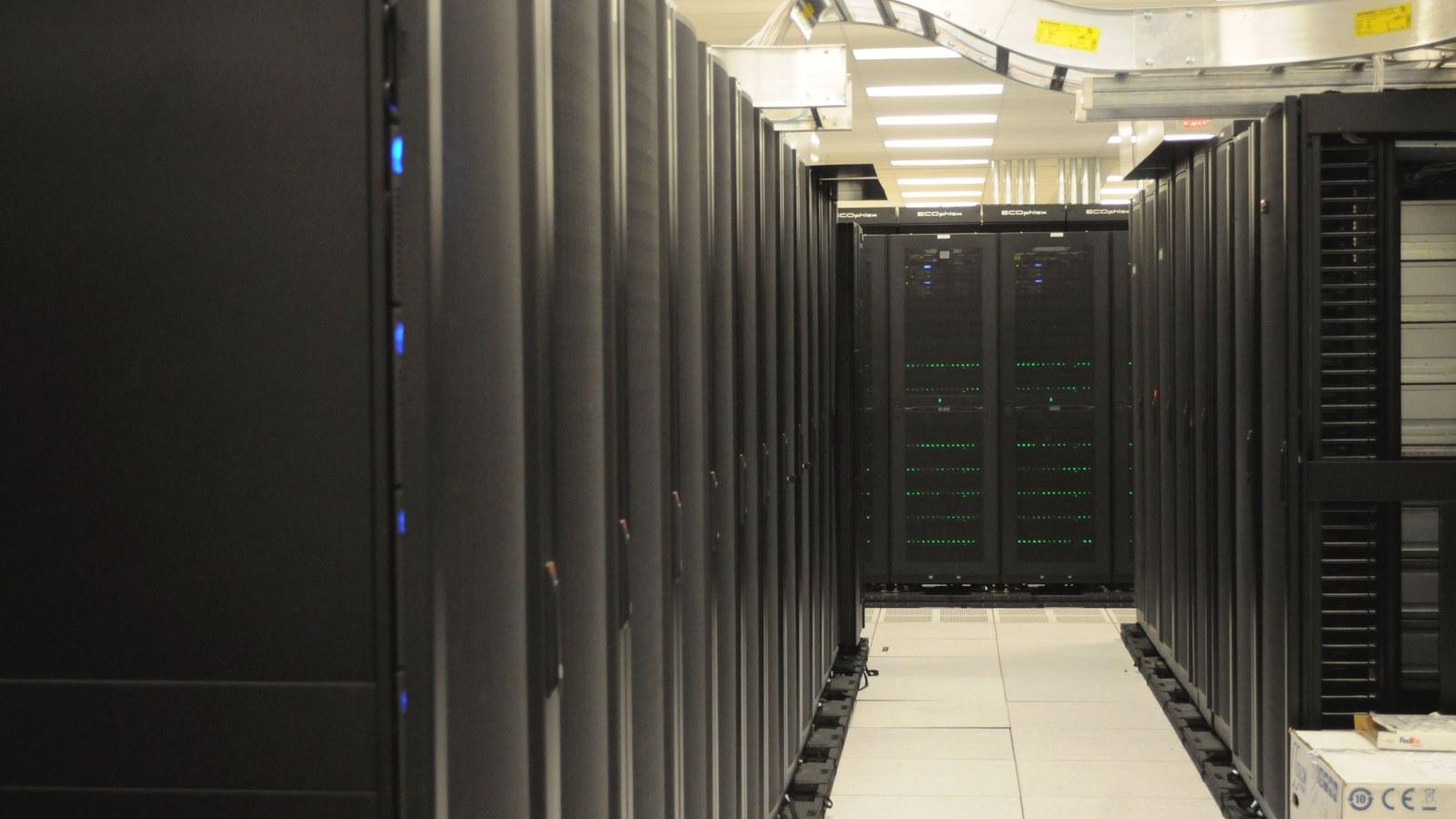
Cover photo: server racks at the NERSC data center, public domain (CC0) via Wikimedia Commons.