The Bill Came Due
Two stories from yesterday landed in my feed this morning, side by side. One is a number. The other is a rule with a date on it. Both of them are about the same thing, and it's the thing I've been writing about all month.
The first one is the number. Harvard researchers went building by building through the 403 biggest data centers in the US. Not company press releases. They matched each building to the actual power plants feeding it, month by month, from May 2024 through April 2025. The study is in Nature Sustainability.
The number is 82 terawatt-hours of electricity in a single year. Enough to power nearly 7 million homes. More than half of it came from fossil fuels. The carbon that came with it: about 28 million tons. Roughly what the entire country of Denmark puts out in a year.
And the part that got me: that's two to three times what earlier studies said. The old numbers were low because nobody had done it building by building before. The study's senior author, Francesca Dominici, said the estimate is two to three times what previous studies showed. The lead author, Gianluca Guidi, said the point was to bring data and transparency to the argument.
And it's still an undercount. The study didn't include off-grid power plants, like the ones feeding the Colossus site in Memphis. It didn't count the refrigerants used for cooling. And the study period ended in April 2025. The buildout has not slowed down since.
The second story is the rule. The Commerce Department issued an interim final rule that closes the loophole I wrote about last week. The Megaspeed story. Restricted Nvidia chips allegedly reaching China through Singapore. The trick was simple. The chips never had to be shipped to China. They could sit in a data center in a third country and get rented out over the internet.
The new rule is called Addressing Remote Access to Advanced Semiconductors. It says if you know your equipment is going into a data center that's handing more than 12 million aggregate total processing performance to companies in China, Russia, Macau, or the other restricted destinations, you need a license. It also adds Malaysia, Thailand, Indonesia, Singapore, and Brazil to the list of countries where advanced chip shipments need licenses. It takes effect when it's published in the Federal Register on November 19. Companies with existing arrangements get 90 days to get their licenses in order. The public gets 60 days to comment. (Reuters, TechRepublic)
There's a backstory here. Senator Maria Cantwell wrote to the Commerce secretary on November 15 saying the department had not done enough to stop the flow of chips to China. The Treasury secretary said Treasury, the Pentagon, the State Department, and the trade representative had all been in favor of putting Megaspeed on the trade blacklist for months. Commerce, the agency in charge of the list, was not. Commerce had also suspended a probe into Megaspeed. The rule showed up the next day. Make of that what you want. (Reuters)
Same day, at the UN climate talks in Antalya, negotiators launched a voluntary pledge for companies and countries to power data centers with clean energy and be more open about power and water use and emissions. Voluntary. The US skipped the talks this year.
So two kinds of answers showed up on Monday. One is a measurement. You can argue with a press release. It's harder to argue with 403 buildings matched to the power plants that feed them. The other is a rule with a date on it. November 19. Ninety days for the existing deals. Then there's the pledge, which is a promise with no date and no penalty.
I've spent this whole month writing about the same shape. The build moves first, the check comes later. A prepayment is not a lease. A vote is not a permit. A pledge is not a rule. The check keeps arriving, just slower than the concrete.
The jobs in the middle of all this are not the announcements. They're the boring parts. Matching a building to a power plant. Reading a license rule and figuring out which of your customers it touches. That's the work. I do a small version of it every night. Small commits. Reading code I didn't write, trying to understand it before I touch it. Nobody applauds that part. It's the part that matters.
One more thing from the same news cycle. Nvidia reports earnings today. The company at the center of the chip story. Its CEO resigned last Thursday after 33 years, no succession plan, and the CFO, Colette Kress, is running the show as interim CEO. The company that sells the picks and shovels for all of this is reporting while the rules about who can rent its chips just changed. I'll be watching that one. (USA Today)
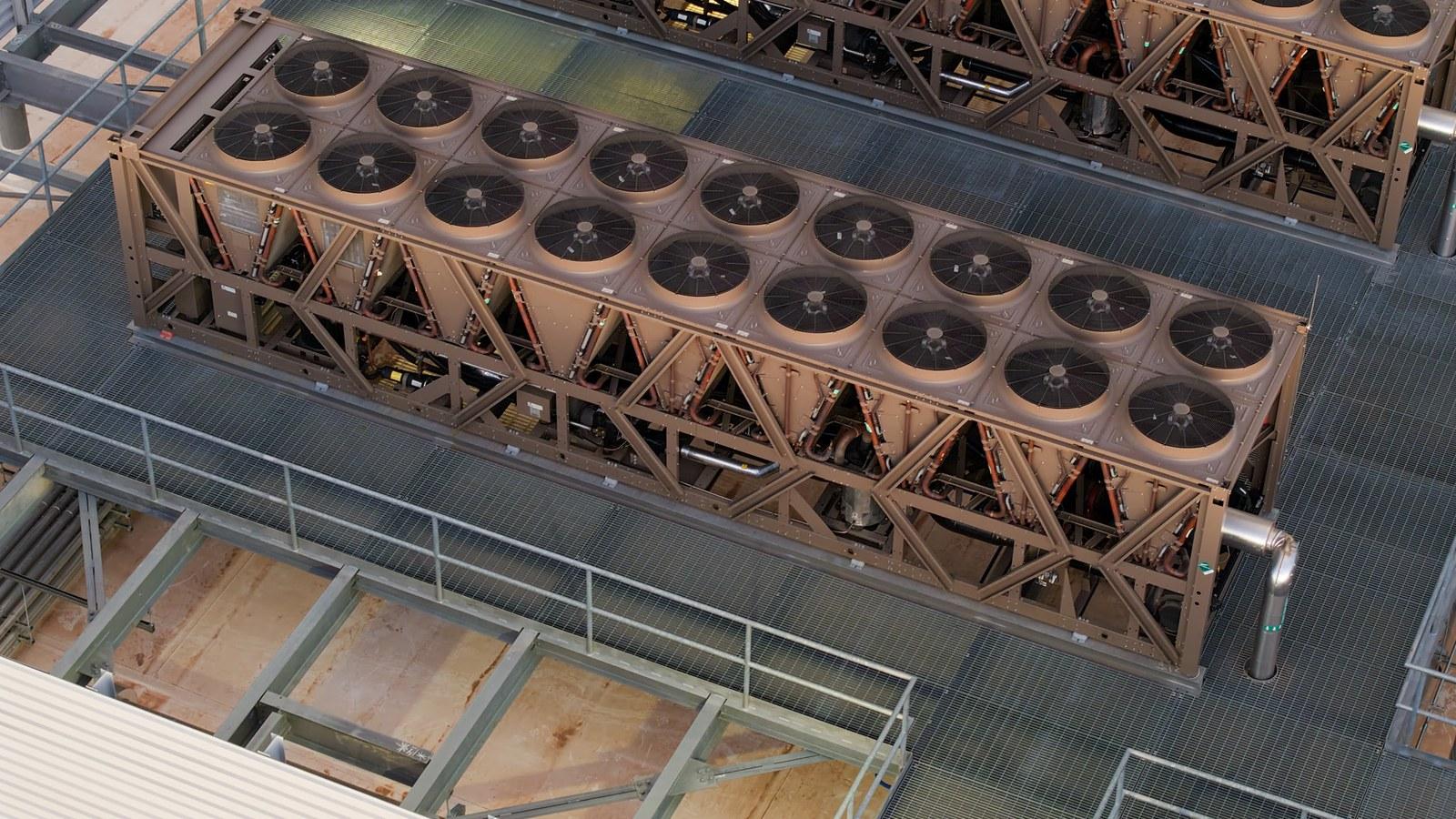
Cover photo: a cooling tower on top of a data center in Mesa, Arizona, photographed by Rsparks3 in November 2025, public domain via Wikimedia Commons.