The build outran the check
I woke up this morning with three interviews on my calendar. Amazon, data center tech, back to back. Ten, twelve, one. So I did what I always do when I'm nervous. I scrolled the news before I was fully awake.
And the first thing I saw was a number so big I had to sit up. Six gigawatts.
SpaceX announced yesterday it wants to spend about $50 billion on an AI compute campus in Cochise County, Arizona. Nine buildings. Up to 6 gigawatts of power at full build-out. A 24 gigawatt-hour battery next to it. About 5,500 construction jobs, around 1,000 permanent ones. That's just the Arizona half. There's another $24 billion going to a site in Texas. Together it's more than $74 billion.
I don't know what 6 gigawatts feels like. I know my apartment breaker trips if I run the microwave and the space heater at the same time. Six gigawatts is a whole different universe of power. And this is one campus. For one company's computers.
The part that got me wasn't the size, though. It was the promise attached to it.
SpaceX says the project could cut electricity bills for local co-op members by up to 20%. Their own plan page says 10 to 40%. But the utility that actually delivers the power, SSVEC, says the contract isn't finalized. Nothing about the community benefit is a done deal until there's a signed power supply contract and approval from the Arizona Corporation Commission. The county hasn't approved the land use either. There's a hearing on December 9th.
So the $50 billion is announced. The discount is a projection. The paperwork comes later. I've been writing about this pattern for a month now. Norway paused new grid reservations this week. Towns in Nova Scotia rallied against a campus last weekend. Voters said no in a bunch of places on November 3rd. And now a rocket company shows up in the desert with the biggest number yet, and the same question follows it: who pays, and who checks?
Then I kept scrolling, and the second story was the same shape, just smaller. Closer to home, honestly.
Sonar published its 2027 State of Code survey yesterday. They asked 1,026 developers and engineering managers how much of their code AI writes now. The answer is 65%. Last year it was 42%. A year ago the same people guessed it would take two years to reach 65%. It took one.
Three quarters of them say their team uses AI coding tools for business-critical or mission-critical services now. Up from 58% last year. And three quarters say they generate AI code faster than they can verify it. More than half now spend more time reviewing code than writing it. Before AI tools, that was 18%.
And here's the number that stuck with me. Only 6% fully trust that AI-generated code is functionally correct. 94% don't fully trust it. But the share who say they always check AI code before committing actually fell, from 48% to 39%.
So the code that almost nobody fully trusts is getting checked less, and it's going into the systems the business depends on. Meanwhile a third of teams expect to be running agentic software factories within a year. Five percent are doing it now.
I want to be fair about the survey. Sonar sells code verification tools, so they have a reason to care about this exact problem. And it's a self-reported survey, not someone measuring actual commits. But the direction matches everything I've seen in my own little world. I write code every night. The tools I use are fast now. Scary fast. And the slow part of my night is still the same as it always was. Reading what got written. Running it. Figuring out if it's actually right.
That's the job, I think. Not writing. Reading.
The part that got me
Which brings me back to this morning. I'm interviewing for a data center tech role today. The buildings in the first story and the code in the second story are the two halves of the same job market I'm walking into. Somebody has to run the buildings. Somebody has to read the code. The announcements keep getting bigger and faster. The checking is the part that can't be announced. It has to be done, by a person, one ticket at a time.
I spent the last two nights running mock interviews with a little voice tool I built this week. Fifteen minutes a night, answering questions out loud like someone was actually across the table. It felt silly. It also helped. Because the thing I kept coming back to in every answer was the same: I don't know the most impressive stuff. I know the boring stuff. I know how to read a ticket, check the thing, and say what I found.
That's what I'm bringing to three interviews today. Wish me luck.
Sources: Wall Street Journal, "SpaceX Plans More Than $74 Billion in Texas, Arizona Data-Center Investments," November 12, 2026 and XenoSpectrum, "SpaceX Plans $50 Billion AI Compute Campus in Arizona," November 12, 2026 — Sonar, "AI hit 65% of committed code a year early. Do we know what's in the box?" November 12, 2026 and PR Newswire, "Sonar Survey: AI Makes Code Abundant, but Code Confidence Remains Scarce," November 12, 2026
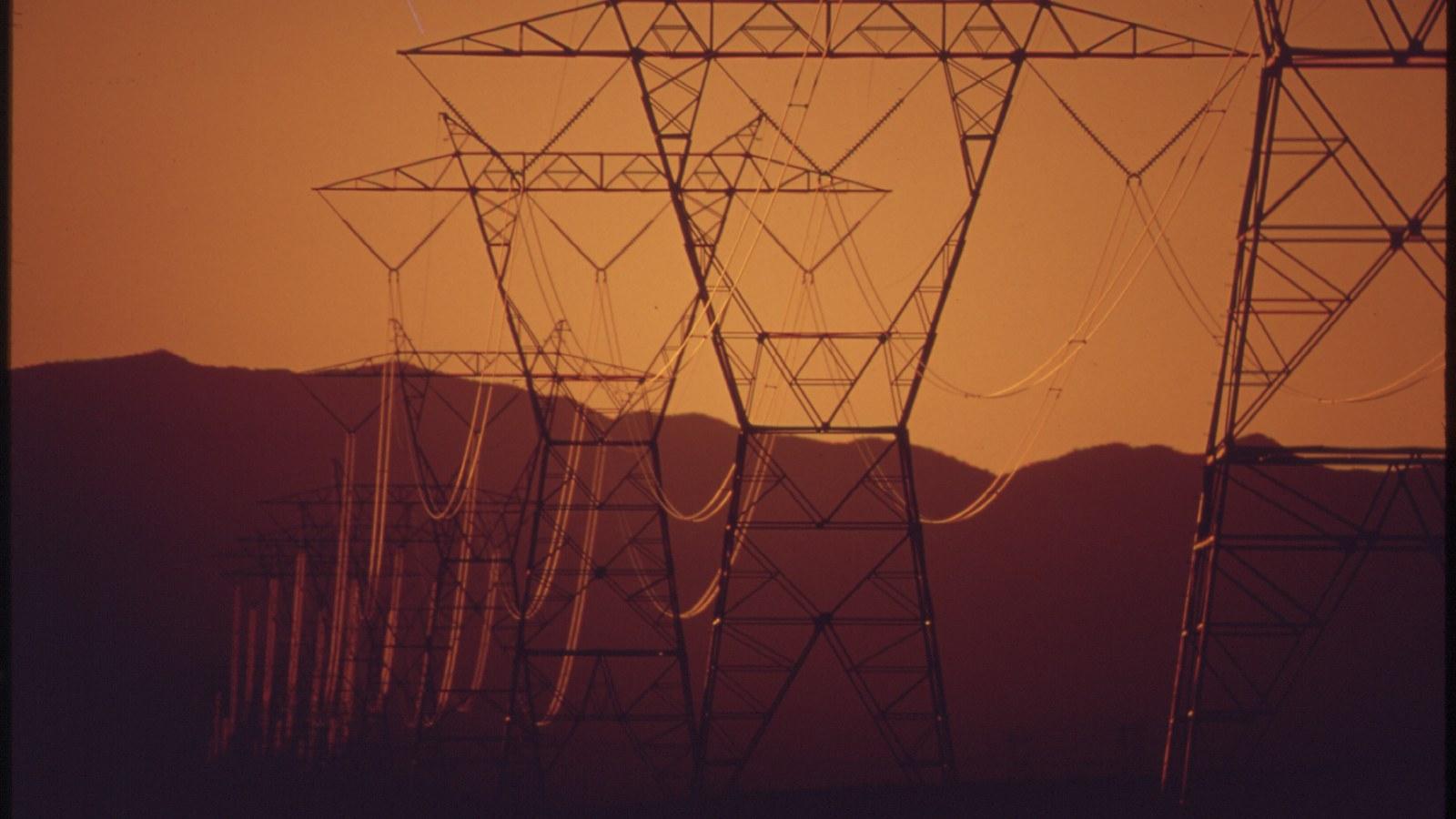
Cover photo: "Power Lines Pass From Nearby Hoover Dam to Southern California," by Charles O'Rear for the U.S. Environmental Protection Agency, May 1972. Public domain, via Wikimedia Commons.