The Week the Buildout Blinked
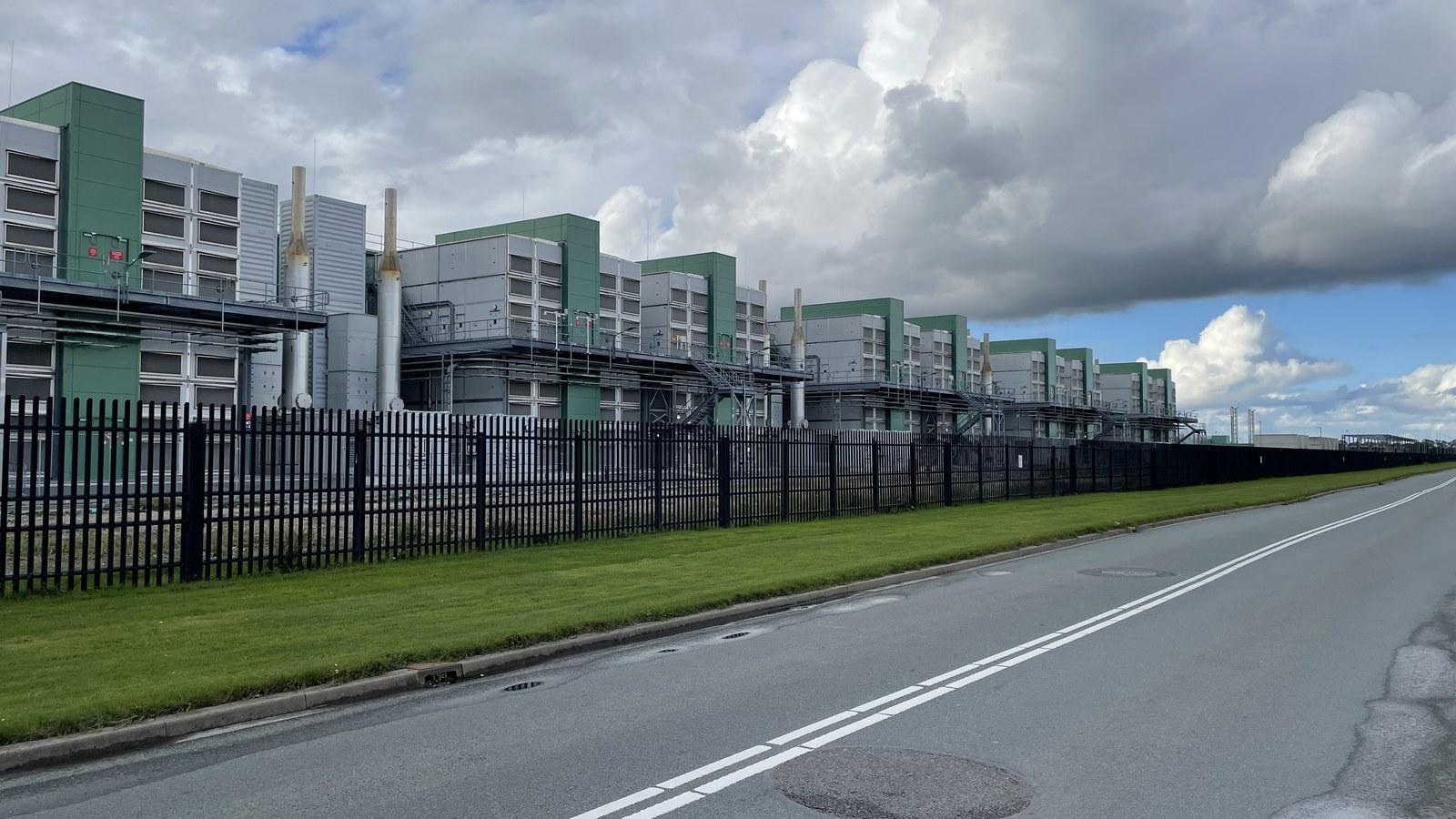
I was up late Friday, pushing my nightly commit, when the headline came through. Microsoft is winding down its AI rental deal with Oracle.
Not canceling it with a press release. Not a big dramatic exit. Just... quietly switching the servers off, month by month, and deciding not to renew.
That scared me more than a loud exit would have.
The deal goes back to 2023. Oracle rented Microsoft computing power to run the AI version of Bing. Bloomberg reported on Friday, November 6, that Microsoft has spent recent months turning that capacity off because the servers run older Nvidia chips that don't meet its specs anymore. The full size of the deal was never disclosed. Microsoft declined to comment.
Oracle pushed back. A spokesperson said demand for its cloud AI infrastructure remains strong, including for earlier-generation GPUs. On its September earnings call, Oracle said GPU capacity that came up for renewal in the first quarter was renewed or resold at about a 20 percent premium to the old price.
Both things can be true. The old chips still have buyers. And the biggest buyer just decided they're not good enough for it anymore.
Three in one week
This wasn't the only pullback. It was the third one reported in a week.
Earlier in the week, Microsoft walked away from Nscale's data center project in Loughton, England, after grid officials said the site wouldn't get power until the 2030s. Then it declined to more than double its Nscale deal in Texas. I wrote about the Texas one on Friday. The Oracle story landed the same day.
Bloomberg framed all of it as one bigger reassessment. Microsoft has committed more than $80 billion to renting capacity from outside cloud providers. CoreWeave, Nscale, Nebius, Oracle. Now it's going through those deals and asking which ones are still worth it.
Let me be clear about what this is not. Microsoft is not leaving the AI buildout. It's still planning close to $190 billion in capital spending in calendar 2026. It's still renting capacity from CoreWeave, Nscale, and Nebius. The Oracle deal was one rental, for one workload, on aging hardware.
But here's what stuck with me. The companies that rent out AI capacity, the neoclouds, borrow heavily to buy chips and build data centers. The whole model rests on long contracts with hyperscalers. When the biggest customer starts checking which contracts to keep and which to let go, every one of those borrowers feels it. Oracle's stock fell to a 52-week low on the news before recovering to close up on the day. The market didn't know what to do with it either.
The other side of the squeeze
While that was happening, the towns were talking too.
On Saturday, November 7, rallies in seven Nova Scotia communities demanded a moratorium on large-scale AI data center proposals. Halifax, Kentville, Port Hawkesbury, Truro, Bridgewater, Westville, Sydney. The target was EverWind Fuels' Point Tupper campus, a $10 billion project where Anthropic has signed a 20-year lease for an 18,600-square-metre facility. First phase is 95 megawatts, coming online in 2027, with a 325-megawatt expansion planned for mid-2028.
The Halifax crowd was reported at hundreds to nearly 1,000 people. No official count. A petition against the project has close to 28,000 signatures.
The protesters' complaint is the same one I've been writing about all month. Water and power. EverWind says the campus will draw from the provincial grid until its approved onshore wind farms are built, but construction on those wind farms hasn't started. Premier Tim Houston's office said the project proceeds only if it meets guidelines on water, the environment, power rates, and capacity.
Nothing has been stopped. The province hasn't said no. It said "only if." That's the same conditional answer voters in the US gave last week, and now it's showing up in Canada too.
What I'm actually thinking
I spend my days in IT support. I've closed 2,579 tickets. Most of them were the same lesson in different clothes: the unglamorous maintenance work is the actual job, and nobody budgets for it until something breaks.
That's what this week looked like to me. On one side, the biggest buyer in the world looked at a pile of rented servers and decided the hardware had aged out. On the other side, seven towns looked at a $10 billion project and asked who pays for the water and the power.
The buildout isn't stopping. $190 billion says it isn't. But it's getting squeezed from both directions now, by the people paying for it and the people living next to it. And the work that survives that squeeze is the same work I've been pointing at all month. Somebody has to keep the old gear running, decide what gets replaced and what gets repaired, and explain to the neighbors, in writing, what a building full of computers actually costs them.
That's not a prompt. That's a job. And it doesn't expire when the chips get faster.
Sources: Bloomberg, via reporting on the Microsoft–Oracle wind-down; Crypto.news on the Oracle deal and Oracle's response; CBC News / The Canadian Press, via Tech Insider, on the Nova Scotia rallies; The Canadian Press, via Pivot News, on the Halifax march. Cover photo: Microsoft data center in Middenmeer, Netherlands, 2023, by Hay Kranen, CC BY.