The grid said no
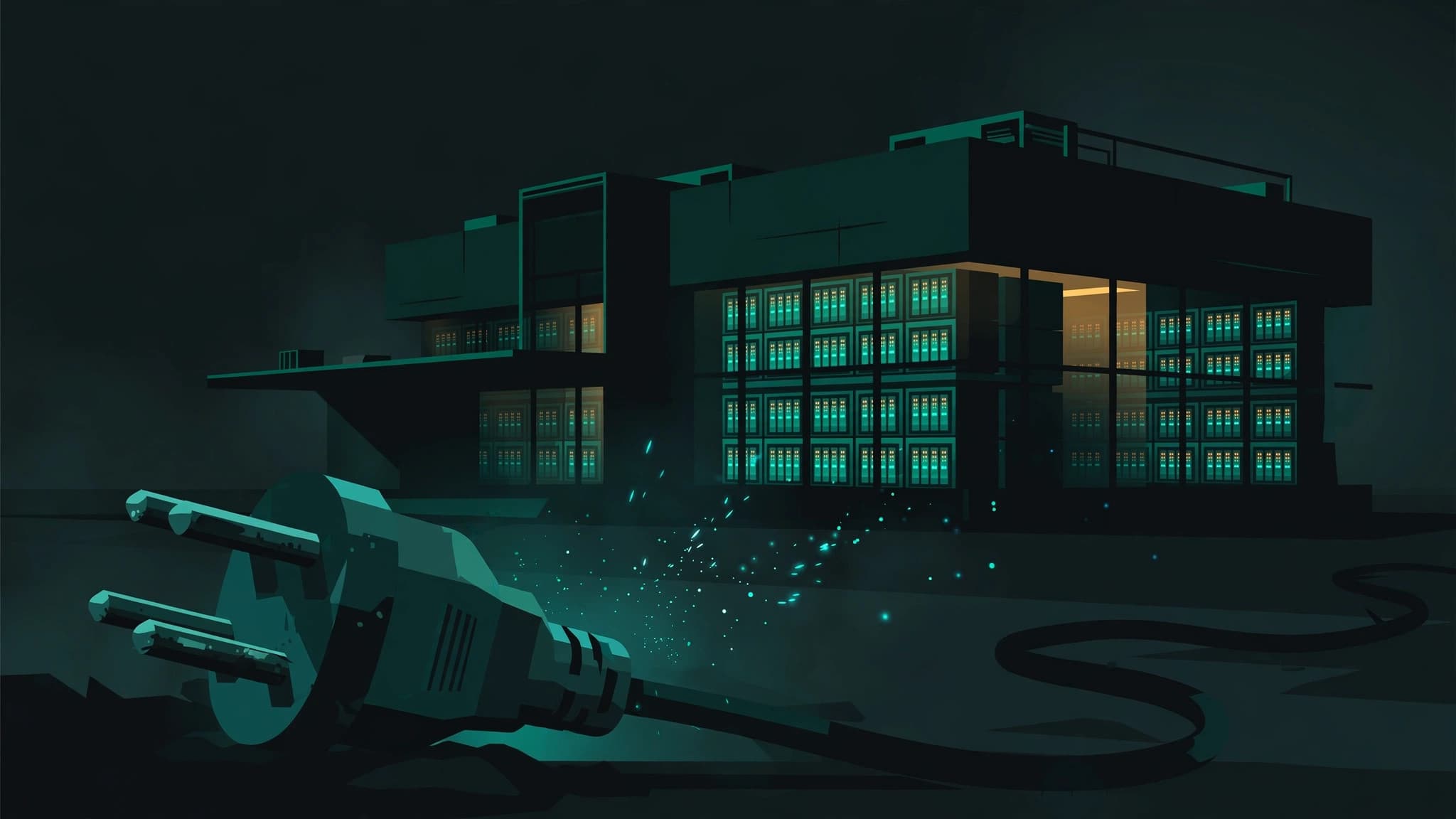
I've spent the last month writing about how the AI boom keeps finding more power. Google bought a nuclear fleet's worth of it. Siemens built shock absorbers for it. Oracle's bringing in fuel cells. Every story was the same shape: the boom hits a limit, and money routes around it.
This week I found the first story where somebody just gave up and left.
Microsoft pulled out of its deal to anchor a data center in Loughton, Essex, with a British company called Nscale. The reason, per Reuters: grid officials told Nscale the site wouldn't get electricity until the 2030s. The site was supposed to be running early next year. 23,040 Nvidia GB300 GPUs. 50 megawatts of AI computing for Microsoft's Azure services in Britain.
Read that again. One of the richest companies on earth, in a market where demand for AI compute is supposed to be infinite, walked away from a nearly-ready data center because there was no plug to put it in.
The deal was one of the ones announced during Trump's UK visit last September, part of the big "Britain becomes a global AI leader" showcase. Now Reuters says grid connection queues in the UK are delaying data center projects by as long as 13 years. Thirteen years. That's not a delay. That's a career.
Microsoft's statement was the corporate minimum: "This decision relates to a single site." Nscale said the relationship is strong, called it a "London-wide grid issue," and said they're exploring alternative power sources and other expansion sites. The timing stings, because Nscale filed for a US IPO last month with Microsoft and Anthropic expected among its major customers, per its prospectus. So this lands right when the company most needs to look like a sure thing.
Here's the part that got me. The same week, Bernstein reported the global AI data center pipeline hit 456 gigawatts in September, up 52 gigawatts in a single month. A 13% jump. Developers are still piling projects into the queue as fast as they can announce them. But the Financial Times found that 47+ large US data center projects have been delayed, withdrawn, or blocked this year, and Bernstein estimates only about a third of the planned US pipeline is actually credible given grid timelines (via AI Weekly).
So the pipeline is a fantasy and the queue is the reality. Everybody's announcing gigawatts. Nobody can get a socket.
For two years the story was: money buys compute. Then it became: money buys power. Google signed a 20-year nuclear deal. Constellation started selling reactor uprates like a subscription product. Oracle's wheeling in fuel cells for a data center in New Mexico. The whole industry routed around the grid.
And now the grid routed back. Microsoft looked at a finished-ish data center and said no, because waiting until the 2030s for electricity isn't a plan. It's a prayer.
The honest part: I don't understand grid interconnection queues. I'm a software guy. My expertise is functions, not load curves. I wrote that sentence in the shock-absorbers post a few weeks back and it hasn't stopped being true. But you don't need to be a power engineer to see what just happened here.
The moat isn't chips anymore. It isn't even money. It's a place in line.
Think about what that means if you're looking for work, like I am. The jobs that matter in this industry are increasingly the ones with nothing to do with code: the people who can get a transformer delivered, who can read a utility interconnection study, who can get a permit through a county that doesn't want you there. Cave City, Kentucky fought a 1,200-megawatt campus with a 12-month moratorium. The scarce skill isn't prompting. It's paperwork, permits, and power lines.
Or look at it from the other direction. Nscale went public-bound on the story that demand is infinite and supply is just logistics. One cancellation, one site, and the logistics are the whole story. The backlog is not revenue. Bernstein's 456 gigawatts is not capacity. A gigawatt in the pipeline is worth exactly what the grid lets you have.
I've been saying all month that the bottleneck keeps moving down the stack. Past the models, past the chips, past the racks, down to the reactors themselves. This week it moved again, one layer deeper: past the reactors, into the queue. Into a line of projects waiting for somebody at a utility to say yes.
Microsoft's still buying everything that isn't nailed down. This isn't the end of the boom. But it's the first time the boom hit something money couldn't fix. And the thing it hit was a power outlet.