The money goes around
I was up late last night pushing my nightly commit when Nvidia's numbers came out after the close. $115.8 billion in one quarter. I read it twice, because a number that big stops looking like a number after a while. It was up 103% from a year ago. And $107.6 billion of it, about 93% of the total, came from data centers. The chips and systems that train and run AI models.
This was Nvidia's first earnings report since Jensen Huang resigned as CEO last week. Colette Kress, the finance chief, is running the company as interim CEO. She led the call. The company guided next quarter to about $130 billion in revenue, which beat what analysts expected. The new Vera Rubin systems have started shipping, and Nvidia calls it the fastest product ramp in its history. Racks are already running at CoreWeave, Google Cloud, Microsoft Azure, Oracle, and Nebius.
It was a huge quarter by any measure. But the number that stuck with me wasn't the revenue. It was the guarantees.
Nvidia now carries $118 billion in guarantees tied to customers' data center projects. Most of it is one cap: up to $105 billion guaranteeing leases on a data center campus in Ohio, where an affiliate of OpenAI is the tenant. Nvidia also invested $30 billion in OpenAI itself. And it has committed up to $10 billion to Anthropic. The money goes out as an investment and a guarantee, and it comes back as revenue when those same companies buy chips.
Four direct customers each made up 11% to 13% of Nvidia's revenue over the last three quarters. The company doesn't name them. Kress said the big AI labs will be about 15% of data center sales this year. She also said Nvidia will "rigorously evaluate" future investments, commitments, and guarantees. That line is the first sign from inside Nvidia that the loop might be getting a closer look.
The second story lands tonight. Anthropic sets the price for its IPO after the market closes, and its shares start trading tomorrow on the Nasdaq under the ticker ANT. The range is $70 to $78 a share for 825 million shares, which would raise up to about $64 billion. The Wall Street Journal reported yesterday that it will probably price above $80.
Anthropic is also selling $26 billion of stock in a separate private placement, at the same price, to seven strategic investors: AMD, Broadcom, Google, Micron, Microsoft, Nvidia, and TSMC. Google and Nvidia are each putting in about $10 billion. So the companies that sell Anthropic its compute are also buying its shares. Anthropic's own filing says it has about $901 billion in compute and infrastructure commitments, against roughly $132 billion in cash and short-term investments. It also reportedly has a commitment of about $1.25 billion a month to SpaceX and xAI for compute, running through May 2029.
Last Friday, the Federal Reserve gave all of this a name. In its Financial Stability Report, released November 13, the Fed said 87% of the market contacts it surveyed named AI as a risk to the financial system, up from 50% in the spring. A box in the report, called "Leverage in the Data Center Buildout," describes how hyperscalers sign long leases that developers use to borrow, chipmakers guarantee the resale value of the chips bought as collateral, and the big firms add equity investments on top. The Fed calls it "circular financing." Debt tied to advanced computing passed $680 billion by October, about five times the $130 billion issued in all of 2023. Across seven of the biggest companies, leases signed but not yet started are worth more than $1 trillion, and take-or-pay contracts and guarantees are worth more than $2 trillion.
I'm a WGU software engineering student. I work IT support during the day and write code at night. I don't own Nvidia stock, and I don't own Anthropic shares. I don't know whether the loop breaks or just keeps going. The Fed's report is careful about that too. It says the links "create vulnerabilities that necessitate close monitoring," which is central-bank language for "we're watching this."
What I do know is the shape of it, because I've written about versions of it all month. A prepayment is not a lease. A merge is not a review. A promise is not a result. The loop works as long as everybody in it keeps paying everybody else, and the moment one of them can't, the circle gets very small, very fast.
The check that matters here isn't a stock chart. It's the filing. Read who guarantees what, who owes whom, and what happens if the tenant stops paying. That's the boring document, and it's the one that tells you whether the number is real.
Tonight Anthropic sets its price. Tomorrow it starts trading. I'll be watching the number, but I'll be thinking about the circle.
Sources: Nvidia Q3 fiscal 2027 results via The Market MBA (Nov 17, 2026); AJP on Nvidia's record quarter (Nov 18, 2026); madrobot on Nvidia halting China chip shipments (Nov 18, 2026); Invezz on Anthropic's IPO pricing (Nov 18, 2026); Benzinga via TradingView on Anthropic's post-IPO risks (Nov 18, 2026); Federal Reserve Financial Stability Report, November 2026 (Nov 13, 2026); CASRAI summary of the Fed report (Nov 14, 2026).
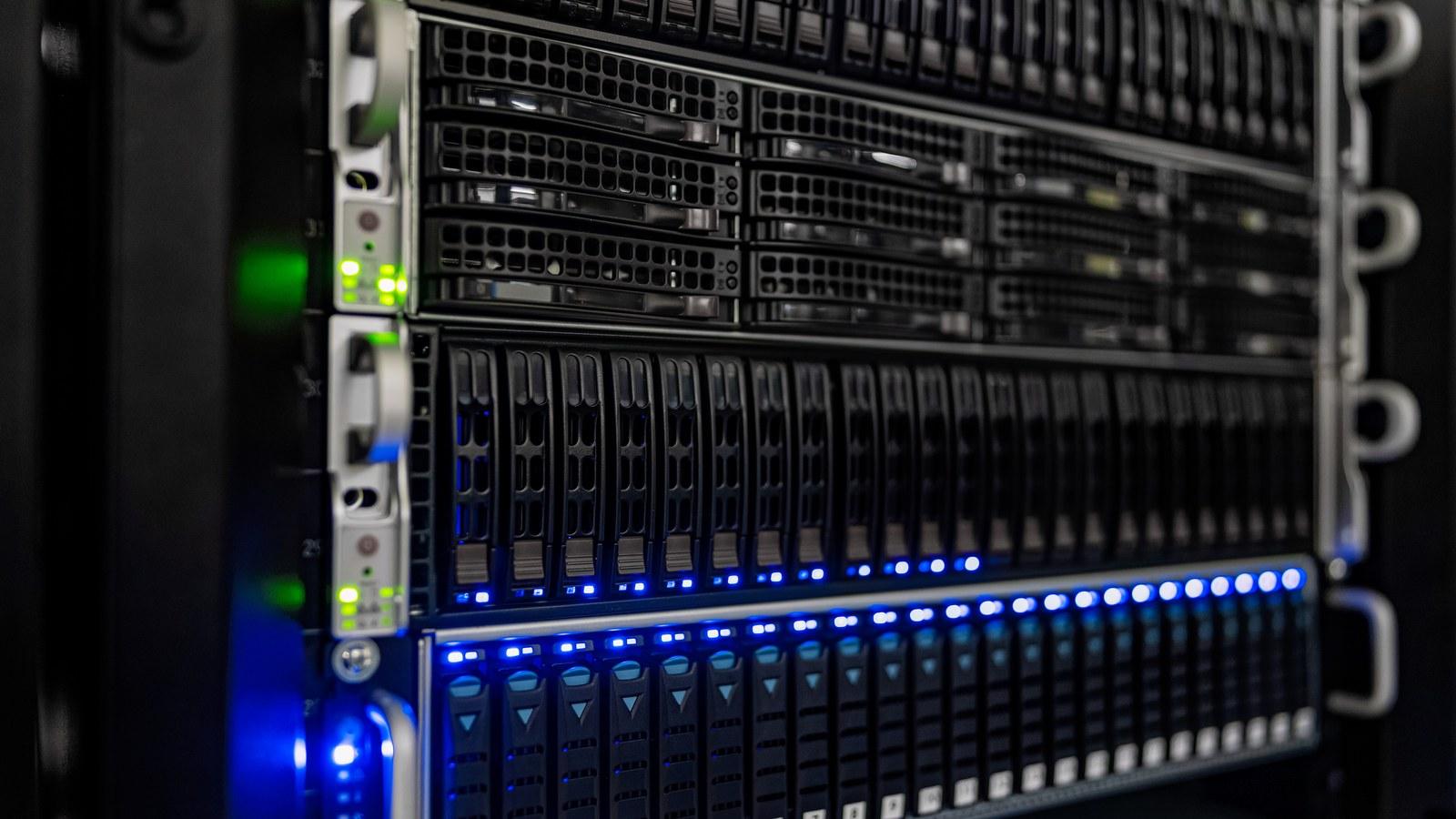
Cover photo: Server racks at the NOIRLab Headquarters Computer Server Room in Tucson, Arizona, photographed by NOIRLab/NSF/AURA/T. Slovinský on March 21, 2022, via Wikimedia Commons (CC BY 4.0).