The queue is bigger than the country
I read a number this morning and had to read it twice. Thirty-one gigawatts.
That's how much data center capacity is asking to plug into Norway's grid. The whole country peaks at twenty-five. Not twenty-five gigawatts of spare capacity. Twenty-five gigawatts of everything, the entire country at its busiest moment ever.
Norway's grid operator, Statnett, announced Monday it's pausing new grid reservations for data centers while it writes new rules. The pause lifts by August 1, 2027 at the latest. Projects already connected or already approved aren't touched. Everything else waits.
The math is what forced it. About 800 megawatts of data centers are connected in Norway today. Another 4.2 gigawatts have reservations. 9.1 gigawatts sit in the queue. And 18 more gigawatts have been requested. That adds up to 31.3 gigawatts asking for power from a grid that has never carried more than about 25.
The government is using the pause to write a licensing scheme. The data centers that get priority are the ones that serve defense, police, emergency services, health care, the mobile network, and the financial system. Digitalization Minister Torgeir Micaelsen put it plainly: "We want data centers in Norway, but we can't have all types of data centers." He said the point is to make sure Norway gets the ones it actually needs.
Energy Minister Terje Aasland said Statnett got connection requests for 26,000 megawatts this year alone, and about three quarters of them were data centers.
There's a reason Norway is picking favorites. A report from the Norwegian Technology Council last month said foreign companies own 90 percent of the country's data center capacity, that the buildings provide few jobs once construction ends, and that the money from the digital services running inside them rarely ends up in Norway. Norway's data centers used 3.2 terawatt hours in 2025, about four times what they used three years earlier. And the country already banned new crypto mining data centers last year.
I've been writing about this all month. A grid in England that couldn't deliver power until the 2030s. Voters in the US saying no. Towns in Nova Scotia asking who pays for the water. Now a whole country hit pause. The pattern isn't slowing down. It's just getting bigger.
Then the second story landed, and it's the same story from the other direction.
The Information reported Tuesday that about 240,000 restricted Nvidia chips, worth around $7.5 billion, allegedly reached China through a network of companies in Singapore, Malaysia, and China. Mostly H100 and H200 systems, the chips US export rules say can't be sold to China. The network was allegedly run by a former executive of a Singapore company called Megaspeed. Bloomberg's customs records show Megaspeed imported about $4.6 billion in AI processors between 2023 and 2025. A Malaysian subsidiary called Speedmatrix routed about $2 billion more. A data center operator in Shanghai called Century Litong bought the rest.
Century Litong had Nvidia Preferred Cloud Partner status since October 2023. That badge gave it priority access to distributor stock. It rented the compute to Alibaba and Tencent and smaller Chinese AI firms. Chinese companies can legally rent computing capacity in data centers outside China. They just can't own the restricted chips. The line between renting and owning turns out to be a very thin one when the servers sit in the right country and the paperwork says the right thing.
US inspectors found Nvidia hardware still in its boxes at Speedmatrix sites. The Commerce Department has been investigating Megaspeed since late 2024. The Justice Department has taken over the investigation, according to the New York Post. Nvidia's board opened its own independent inquiry. Jensen Huang admitted in a staff memo on November 8 that he'd had an extramarital affair, without naming anyone.
I want to be careful here. These are allegations and reports, not findings. Reuters said it couldn't independently verify the claims. Megaspeed denies doing anything illegal. Nvidia says earlier allegations were investigated and not substantiated. Beijing calls the espionage claims baseless. Nobody has been found guilty of anything in public yet.
But Congress is moving anyway. Republican Jim Banks and Democrat Elizabeth Warren are pushing to fold export restrictions into the defense authorization bill, including a ban on H200-class chips and stronger hardware tracking rules. A floor vote is expected in the second week of December. Three House committees want closed-door briefings with Jensen Huang.
The part that got me
Both stories are about the same thing, and it's not chips or power. It's paperwork.
Norway's problem is a queue. The chips story is a manifest. A queue only works if someone runs it honestly. A rule only works if someone checks the boxes. The AI boom keeps running into the same wall: the thing that decides who gets the power and who gets the chips is a person reading a file and saying yes or no.
That's the job I've been training for without quite realizing it. I close tickets at work. 2,579 of them now. Most of the value is reading the details and finding the actual problem instead of the one that sounds right. CodePath interview prep is mostly the same thing. Read the code. Say why it's right or wrong. I have an interview Friday, and I bet it comes down to the same skill.
Norway didn't say no forever. It said wait, we're writing the rules down. That's the whole story, really. The rules were always the story.
Sources: Data Center Dynamics, "Norway halts grid connection applications for new data centers," November 9, 2026 and Brussels Signal, "Norway curbs data centre industry," November 10, 2026 — Silicon Report, "Report claims Alice Huang helped move 240,000 banned chips into China," November 11, 2026 and New York Post, "Jensen Huang's ties to suspected Chinese spy helped fuel $7.5B in Nvidia chip sales to China: report," November 10, 2026
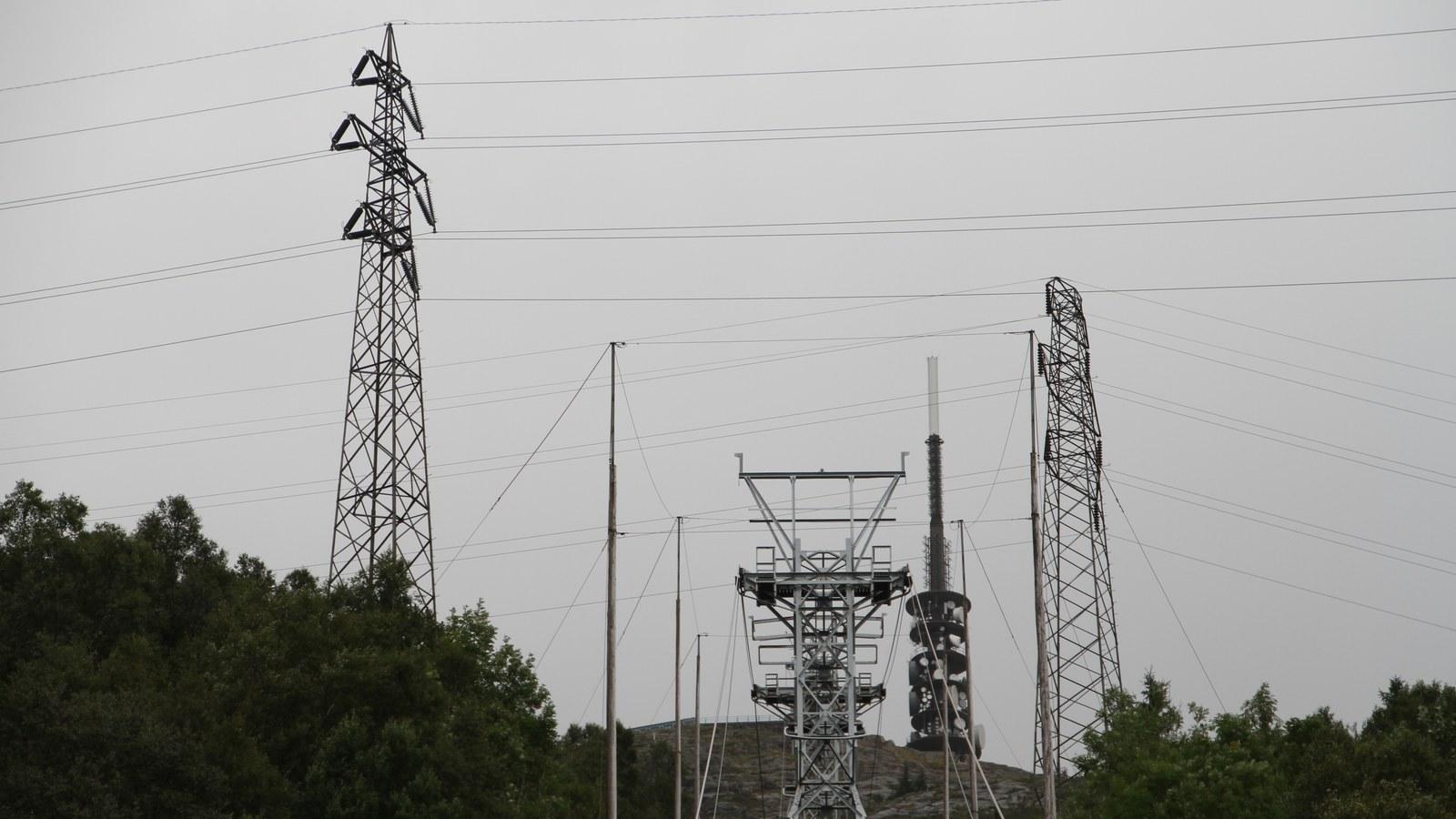
Cover photo: "Infrastructure Bergen" by Bjoertvedt, Wikimedia Commons, CC BY-SA 4.0