They put it in writing.
I wrote about this one two days ago, when it was still a vote count. Tuesday, voters across the country said no to data centers. Thirty-nine local measures restricting them passed, according to the Data Centers on the Ballot tracker. I ended that post saying the bottleneck had moved from megawatts to permission slips.
This morning, before work, I read the industry's answer. It came in writing.
OpenAI published two documents today. A National Community Compact and a Compute Campus Policy Blueprint. The compact is a list of promises for every future campus OpenAI owns and operates. Pay the full cost of the electricity it uses, plus the grid upgrades needed to serve it. Publish how much water and power each site uses. Prefer closed-loop cooling, the kind that recycles water instead of drinking it. Commission independent noise studies before a site opens and every year after. Stop making public officials sign NDAs. Name a local contact. Report publicly every year.
The blueprint is the more interesting document. It asks lawmakers to turn those same rules into law for the whole industry. State utility commissions would set special rates so big power users pay the extra grid costs they create. OpenAI's own words in it: voluntary measures alone don't meet the scale of this moment.
That's a company asking to be regulated. I don't think I've ever written that sentence before.
OpenAI says the work started in August, before the election. Its chief global affairs officer told Axios on November 1 that a policy push was coming right after the midterms. Maybe that's true. It doesn't change what the paper says. It changes how much you trust it.
And the paper has limits worth naming. The compact only covers future campuses OpenAI owns and operates, and it doesn't say which current sites that includes. The promises are real on the page. The test is whether they survive contact with a real town.
The first test has a name. Effingham County, Georgia, where OpenAI is planning a campus with a 3.2-gigawatt Georgia Power contract, delivered in phases between 2028 and 2032. The utility can cut power to the site by up to 1,000 megawatts during peak demand. OpenAI has committed $80 million to community projects there, including $4.8 million for free school meals for all 14,000 students in the county and $2 million for a local park. In Pike County, Ohio, OpenAI and developer SB Energy put $6 million toward local childcare.
So watch Effingham. The local compact for that campus. The first independent noise study, published on OpenAI's website, before the place starts running. Until those exist, this is a promise. Promises are better than silence. They are not results.
The part I'm watching
Google answered the same week with a different kind of paper. On Wednesday it announced a $15 billion investment in Malaysia over 2027 and 2028, building new data center campuses in Selangor and Negeri Sembilan. Its first Malaysian campus, at Elmina Business Park, is already running.
Google's plan has numbers you can check later. More than a gigawatt of new clean energy for the national grid. Google says it will pay for all the power its campuses use and the cost of connecting them to the grid. Its campuses are designed for a PUE of 1.12 to 1.14, against an industry average of 1.54. And there's a $160 million reservoir and water treatment plant on the Linggi River, announced two days earlier.
The part that matters most to me is the smallest line in the announcement. Google is setting up Data Center Institutes at polytechnics in both states, starting in 2027. Ten-week curriculum. Practical training on a physical data center simulator. The point is to train and place vocational jobseekers into deployment and operations roles at the actual facilities.
That's a job pipeline with a date on it. Not a press release about the future of work. A simulator, a curriculum, a campus.
I'm a WGU software engineering student who works IT support and writes code at night. I have never negotiated a power contract. I have never run a data center. I don't know whether a written compact holds up when a project is behind schedule and over budget. Nobody does yet. That's what the next two years are for.
But here's what I do know. Two days ago the story was voters saying no. Today the story is two of the biggest builders in the world answering in writing, with numbers attached. One asked to be regulated. The other is building a school for the people who will run the building.
I don't trust press releases. I trust the first noise study, the first water report, the first class of students who finish that ten-week course and get hired. Those are the dates I'm keeping.
Sources: Engadget: OpenAI says it will protect local resources and report on the impact of its data centers · Unite.AI: OpenAI publishes Community Compact and AI Campus Policy Blueprint · Google: US$15 billion Malaysia investment
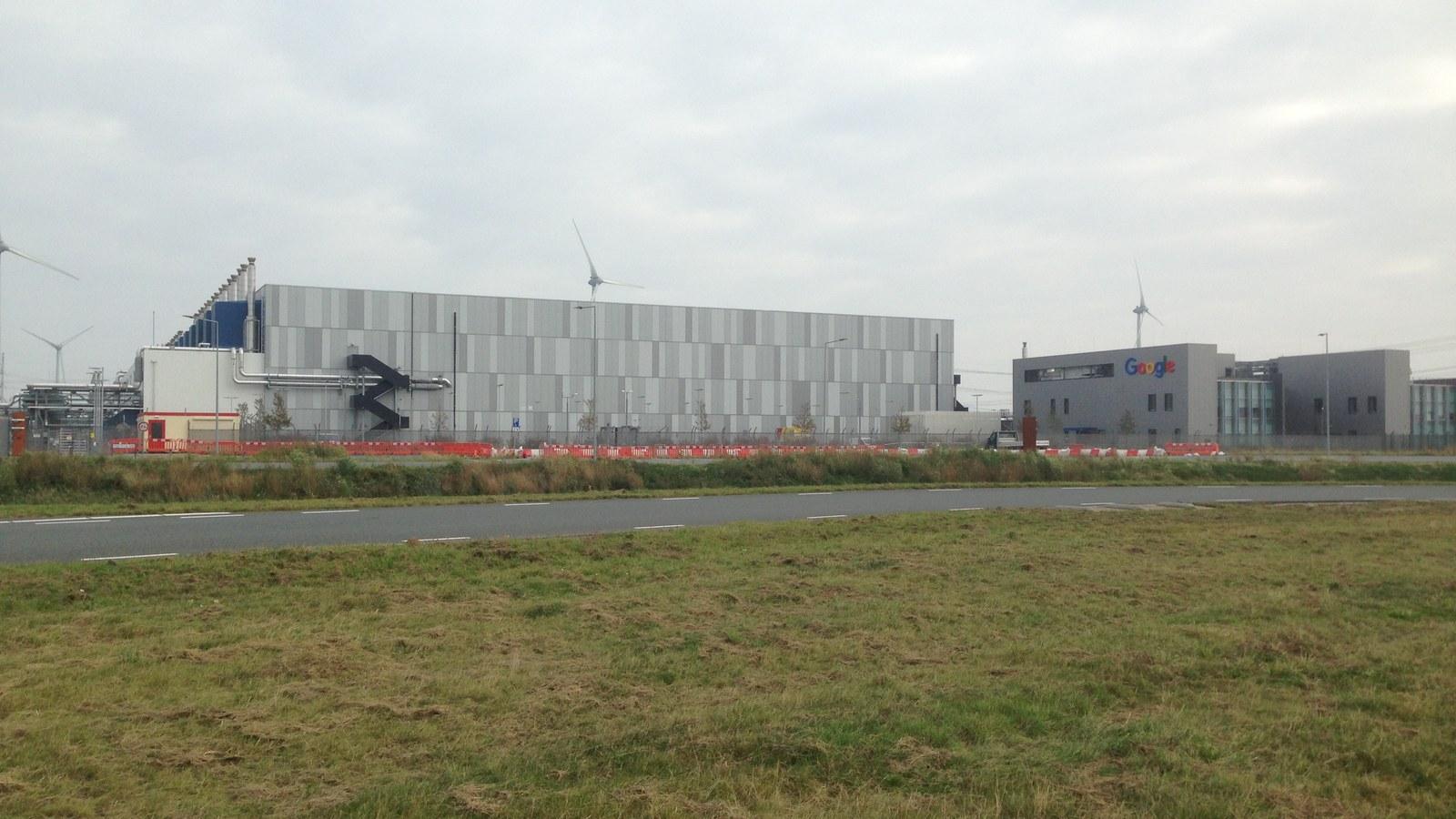
Cover photo: Google's data center in Eemshaven, Netherlands, by Ymnes, CC BY-SA 4.0, via Wikimedia Commons.