Somebody has to pay for the $1.2 trillion AI boom
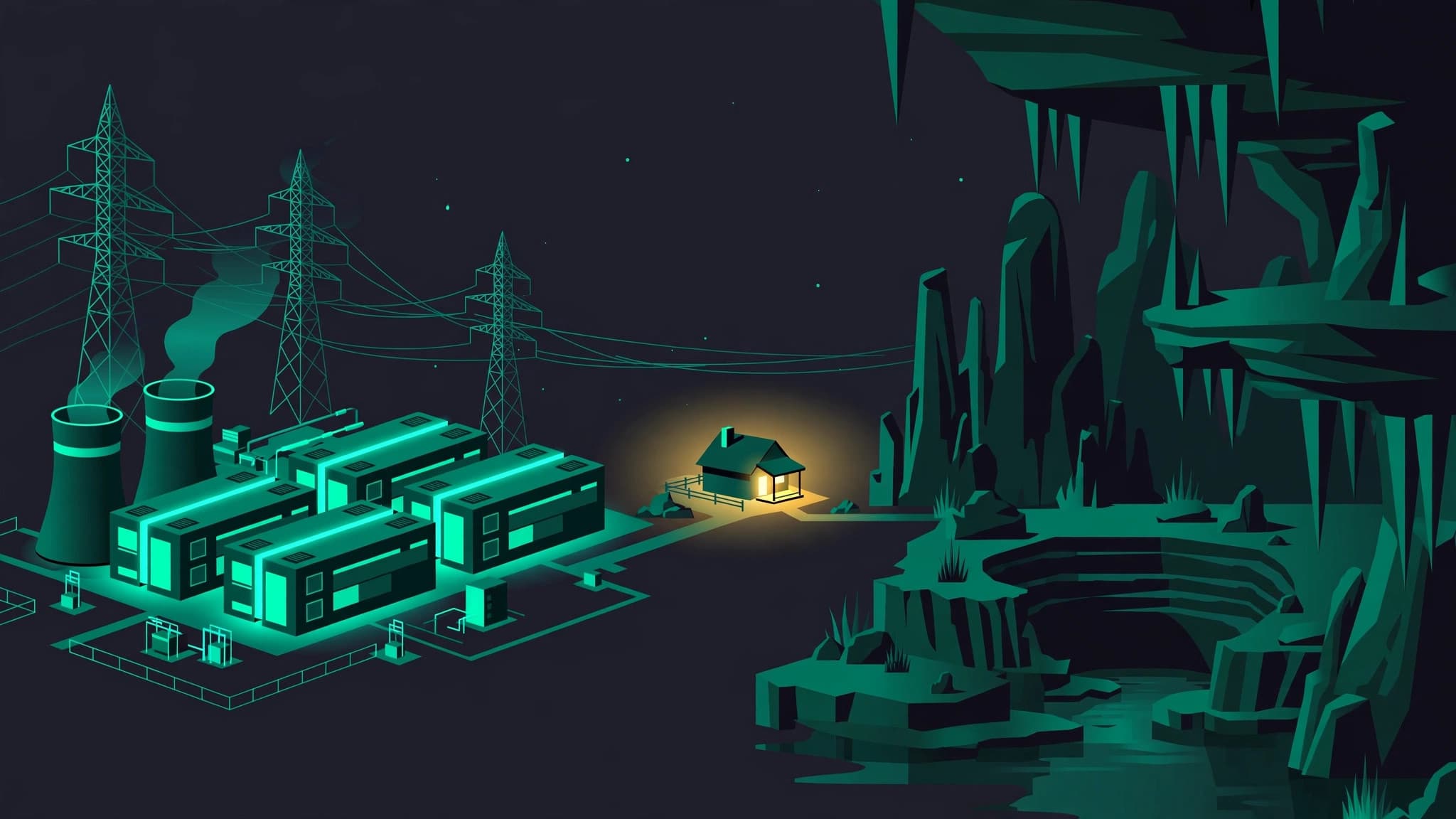
I was filling out job applications last night. IT roles. Help desk, junior sysadmin, the usual.
Between applications I was reading about how the five biggest hyperscalers are about to spend $1.2 trillion in a single year. And I had the weirdest thought. The industry can't find money for me. But it found a trillion dollars for itself.
That number comes from Goldman Sachs. Their analysts say Amazon, Alphabet, Microsoft, Oracle, and Meta will pour roughly $1.2 trillion into AI infrastructure capital spending in 2027, up from about $800 billion this year. That's above Wall Street's consensus of around $1.1 trillion. Their upside scenario pushes $1.4 trillion (TradingView). Over six years, 2026 through 2031, they project $7.6 trillion in total (TokenPost).
Read that again. $7.6 trillion. That's not a budget. That's a country.
Here's what caught me, though. The same analysis says these companies are now spending more than they bring in. In the second quarter, the biggest US hyperscalers spent $129.2 billion on property and equipment. That's 111% of the cash their operations generated. A year earlier it was 83% (Edge Consultancy). They're outgrowing their own wallets.
So they're borrowing. Nearly $500 billion in AI-related debt has been issued globally, and debt is expected to finance 35% of hyperscaler capex in 2027 (TokenPost).
And Goldman says the hyperscalers will need about $300 billion in annual AI revenue just to break even on the buildout.
I read that number three times. $300 billion a year in AI revenue, just to make the math work on the buildings alone. I don't know if that math works. I don't think anybody knows. But the cranes are already moving.
Which brings me to Kentucky.
About 90 minutes north of Nashville, there's a town called Cave City. Population around 2,400. It sits near Mammoth Cave National Park, the longest known cave system on Earth. More than 426 miles surveyed. A UNESCO World Heritage Site.
Developers want to build a $4.8 billion hyperscale data center on about 600 acres there. Ten buildings. Up to 1,200 megawatts at full build-out. That's enough power for more than a million US homes, or more than half of all households in Kentucky (USA Today).
The town panicked. The council passed a 12-month moratorium on new data centers. The developer, Kentucky Industrial Alliance, promptly sued the city. The city asked a judge to dismiss. They're due back in court November 23.
I get both sides, kind of. The developer's study projects 360 permanent jobs and $45.2 million a year in tax revenue. Nearly 30% of Cave City lives in poverty. That's real money to a town running on a $3.5 million annual budget.
But the cave sits on karst. Porous limestone. Sinkholes. A hydrogeologist who's studied the system for decades says the proposed site sits "well within" the groundwater area that drains into the cave system. A spill or contaminated stormwater could travel for miles underground. A councilwoman named Leticia Cline put it plainly: "If you're starving, you're gonna eat a cracker and think it's steak."
And Cave City isn't alone. The National Parks Conservation Association has identified more than 70 park sites facing pressure from data center growth (USA Today).
I'm a software engineering student who works, studies, and codes every night. Nobody is handing me a trillion dollars. But watching this, I'm learning where the actual jobs are.
They're not in prompting. They're in the bottlenecks. Goldman lists them: energy supply, labor availability, memory chip shortages (TradingView). Only 50 to 60% of the data center capacity scheduled for the next year or two is expected to come online on time (TokenPost). Power, cooling, grid connections, construction. That's the work that's actually hiring.
I don't know if the AI revenue will ever show up to pay for all of this. $300 billion a year is a lot of subscriptions. But the buildings are real. The power lines are real. And somebody has to build them, cool them, and keep them running.
Might as well be people like me.